
LaMotte & Cochran Band / C. Diane LaMotte
(UNDER CONSTRUCTION- I will add music clips and pictures ASAP)
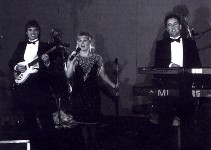
C. Diane Cochran LaMotte
January 14, 1962 – September 14, 2005
Entertainer Diane LaMotte toured country, `had a heck of a following’
Cynthia “Diane” Cochran LaMotte rubbed shoulders with the rich and famous as a child, thanks to her famous dad.
But as a young adult, she became a popular entertainer in her own right, as a supper-club singer in Las Vegas and elsewhere with the LaMotte and Cochran Band.
 LaMotte of Geneva — daughter of the 1960s rock icon Wayne Cochran of C.C. Riders fame — died Wednesday after a lengthy battle with amyotrophic lateral sclerosis, or Lou Gehrig’s Disease. She was 43.Diane LaMotte was a C.C. Rider. She made her singing debut at age 9 in Las Vegas with her father’s band and performed as a backup singer at 16, said her husband, Keith LaMotte.
She branched out at 21 by auditioning in Miami as a singer for the Summer Love show band, led by LaMotte.
“I didn’t want to hire her. I thought she’d be a prima donna,” recalled LaMotte, who later married her. “But I was amazed at the wonderful voice I heard behind me.”
The group toured the United States and Canada, playing Caesar’s Palace resorts and Playboy Clubs.
“We fell in love on stage,” he said. “We did everything . . . Broadway, jazz and top 40s. We weren’t famous, but we had a heck of a following.”
The couple left the road to settle in the Orlando area in 1986 and married a year later. After a stint as a singing duo in local clubs, the two formed Tiffany Production Studios to do voice-over work with commercials before branching into videos.
Today, the studio also produces Orlando Wedding TV, a how-to-plan-a-wedding show that airs twice a week.
Their daughter, Amanda, born in 1988, soon followed in her parents’ footsteps, with a flair for dancing and acting. She landed a lead role in the PBS television traveling show Dragon Tales Live four years ago. She and her mother toured with the show for year.
Diane LaMotte’s first symptoms appeared at the end of the tour. First, she limped. Then she had trouble climbing stairs. The ALS diagnosis in November 2002 “stunned” the family, her husband said.
The fatal neuro-muscular disease that wastes the body’s muscles, including the respiratory system, forced her into a scooter, then a wheelchair and, finally, her bed.
“She never complained,” Keith LaMotte said. “She prepared us for her death and how to go on.
“She was an absolutely phenomenal mom and the best partner a person could have.”
She also is survived by her mother, Monica Cochran; one brother, Chris Cochran; and one sister, Cynthia Warford, all of Miami.
_______________________________________________________
Here’s a little bit about Diane’s Dad, legendary performer Wayne Cochran
Wayne Cochran
https://en.wikipedia.org/wiki/Wayne_Cochran
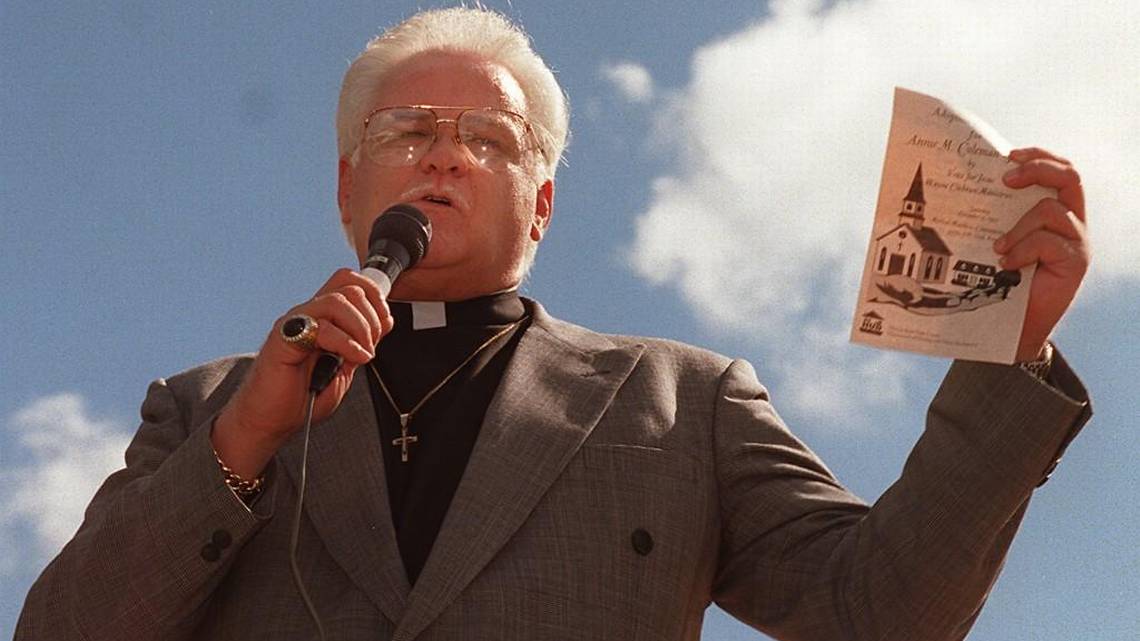
Pastor Wayne Cochran preaches in Miami in this Dec. 1995 photo. Candace Barbot Miami Herald File
Wayne Cochran, former Macon soul rocker who became soul-saving minister, dies at 78
Wayne Cochran, the soul singer known for his outlandish outfits and platinum pompadour who came to be called The White Knight of Soul and who chucked it all to become a Miami minister, died Tuesday at his Miramar, Florida, home of cancer, his son Christopher Cochran said.
Cochran was 78.
As a teenager in Georgia, Cochran heard the black music that captivated white kids and was bitten. “I never heard race in the music. It was just music that spoke to me. It moved me,” he told the Herald in 2011. He moved to Macon where he struck up a friendship with the late soul singer Otis Redding. In 1960, he played bass with Redding’s band on the single, “Shout Bamalama.”
His towering pompadour hairstyle, which got more attention than President Donald Trump’s hair before social media memes were a thing, was arguably more famous than his songs — and the songs he recorded with his band, the C.C. Riders, were plenty famous.
The Blues Brothers touted Cochran in the duo’s classic 1980 musical comedy film and recorded his signature ode to his adopted hometown, “Goin’ Back to Miami.” Pearl Jam covered “Last Kiss.” Rod Stewart was a fan of the singer of rockabilly and a sound that would come to be called blue-eyed soul.
And Elvis Presley borrowed elements of Cochran’s revue from the Las Vegas stage they both shared in the 1960s, as well as his rockabilly sound. When Presley sang Ma Rainey’s 12-bar blues song, “See See Rider,” in Vegas and for his 1973 TV special and album, “Aloha From Hawaii via Satellite,” the 1920s song also came to be known as “C.C. Rider.” Presley’s homage to his pal was obvious.
That towering pompadour eventually tamed to a manageable silver white. The outfits became respectable jackets. But the throaty, commanding voice that fronted Wayne Cochran and the C.C. Riders and more than held its own with Presley’s, remained. Cochran just found another audience.
The church.
After breaking up C.C. Rider in the 1970s, the Thomaston, Georgia-born Cochran started the Voice for Jesus Church near Miami Gardens in a row of warehouses along the Palmetto Expressway and Northwest 167th Street.
He had tasted the heights of rock ’n’ roll success, the “life in the fast lane” lifestyle the Eagles once embedded in pop culture from within a North Miami recording studio not far from where he’d set up his church. Too many drugs. Too many women. Too much partying.
“About 10 years ago, I had a gun to my head,” Cochran told the Miami Herald in 1983. The excesses, which led to divorces and near suicide, were no longer enticing. “I decided to take it one day at a time and try to find the answer,” he said.
The quest took some strange detours. Rolling Stone magazine once called him “Rock-and-roll’s first Egyptologist” because he went seeking the power of the pyramids — a trend in the decade that gave us the Pet Rock and disco.
“I needed something that would work. I didn’t need to hear about heaven. I needed to know about tonight, baby,” he told the Herald in 1983. All the “occults,” as he called them, quoted the Bible. Cochran figured he’d turn to the Scriptures, too.
The Word captured the wild man.
Cochran would use the power of popular music for the rest of his life through his active ministry in Northwest Miami-Dade.
“We’re not typical of a church,” he told the Herald. “We’re loud. It burns. I believe in the power of music. If you don’t want to get ecstatic, don’t come to this church. There ain’t no tombstones sitting in there and if they are, we’re gonna resurrect them. We have a good time. We boogie.”
Of course, he did.
From Cochran to Neil Diamond to Bruce Springsteen, rock ’n’ rollers know that commanding an arena full of faithful fans has the same allure as leading a flock of faithful believers.
In 1964, Cochran was in Miami and took a gig as house band of a club that opened on the 79th Street Causeway. There, at The Barn, Cochran’s borrowed sound became his own.
He also knew that no one was watching the band when they were dancing, and Cochran’s music was eminently danceable. So he developed a performing style that would later serve him as a pastor.
“I would go out on the dance floor and the horn players would follow me. I’d drop down on my knees and they’d form a circle around me. Then everybody would stop dancing and start watching, and we just kept doing that until we became a show band, where people sat down or stood at the dance floor and just watched us,” he told the Miami New Times in 1997.
Cochran’s flamboyant style drew the famous through its doors to hear the C.C. Riders.
One of these stars, Jackie Gleason, who was filming his CBS show at the Miami Beach Convention Center, was reluctant to book local talent because hopefuls would clamor to get on his program and overwhelm producers with pleas.
Cochran was something else, though.
On “The Jackie Gleason Show,” Cochran introduced “Goin’ Back to Miami” to a national audience. Performances on other mid-1960s TV shows grew the song’s audience. A young Dan Aykroyd and John Belushi took notice and, as the Blues Brothers, introduced the song to an ’80s audience. Cochran and the C.C. Riders took over Vegas and opened for a commercially revived Presley.
Back in South Florida, Cochran also discovered a young bass player in Oakland Park who approached him looking to join the C.C. Riders in the early 1970s. “He made sounds on his instrument I had never heard before,” Cochran told the Herald in 2011 about Jaco Pastorius, the preternaturally gifted bassist who became one of the most distinctive musicians jazz has ever known. Pastorius would go on to back Joni Mitchell during her jazz phase in the late 1970s. Pastorius, who lived hard, was killed at 35 after a confrontation with a Wilton Manors bouncer in 1987.
By then, the Rev. Cochran was clean for more than a decade and entrenched in his Miami Gardens-area church, which, at one point, spiritually adopted 800 families who were living in the Annie M. Coleman Gardens Housing Project in Liberty City.
“He was all about family,” his son Christopher, also a pastor, said. “Over the course of his 25-year career in the music industry he employed over 300 people with different members of the band and the people at his church. He always looked after people. He ran his building like a big family.”
A fellow pastor from the Good Shepherd Lutheran Church, where Cochran’s wife and children were baptized when they were born again, once said of Cochran, “He couldn’t be quiet about music, and he can’t be quiet about the Lord.”
Cochran, who saw himself as a teacher, could have it no other way. He spread his ministry nationwide through appearances over the years.
“I’m a hillbilly with a sixth-grade education. I’m a rock ’n’ roll singer,” Cochran told the Herald in 1983. “And yet, pastors will recognize the anointing and invite you in for four or five days to teach their flocks.”
Cochran’s survivors include his children Christopher Cochran and Cindy Warford, seven grandchildren and five great-grandchildren. He was predeceased by his daughter Diane and his wife Monica Cochran. Services are pending.
http://www.macon.com/news/local/article186166683.html
_____________________________________________________________
LaMotte & Cochran Band / C. Diane LaMotte
